Thoughts from a Ukulele Teacher

Learning and playing the ukulele is a lot of fun, and perhaps there is no better reason than this. The pleasure of creating music on an instrument is its own reward.
In the context of a school, of course, there are competing options for instrumental music. I also work with drums, keyboards, iPads, percussion, recorders, flutes, clarinets, trumpets… and in all this experience, nothing beats the ukulele for whole-class instrumental music learning.
Apart from being a load of fun, the ukulele is also…
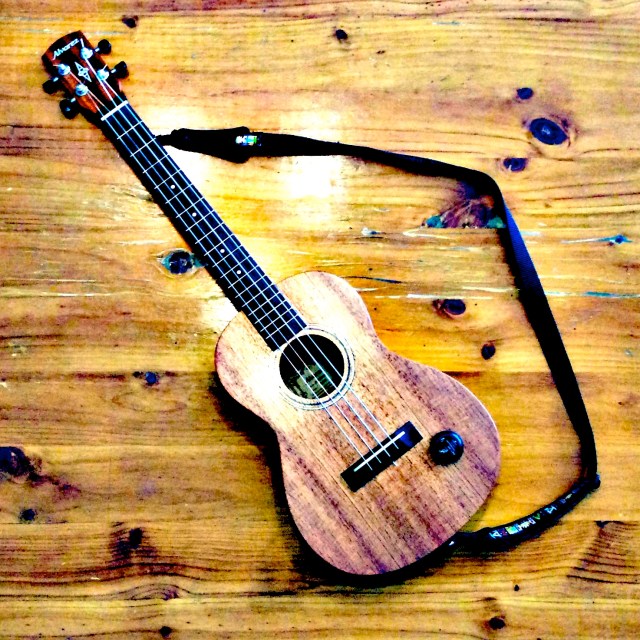
Accessible
It’s small, it’s cheap, it’s portable. A new player can quickly start to get rewarding results from their efforts.
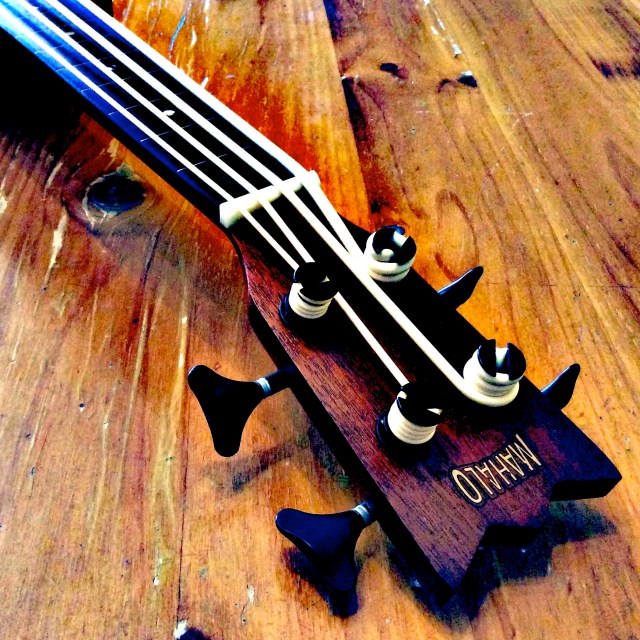
Versatile
Play tunes, play chords, play accompaniments, play instrumental music. Have a fun sing along or learn to play the classics.
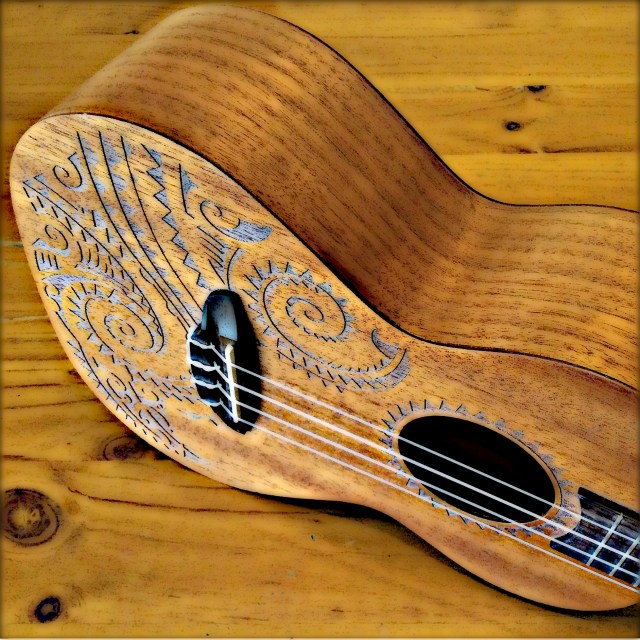
Foundational
Learn how music works by making music. Learn to play in a group, learn transferable instrumental skills.
The advantages of ukulele for your school’s Creative and Performing Arts program include portability, adaptability, value for money, and relatively straight forward maintenance (tuning regularly and occasionally changing strings.) There’s only one school instrument I can think of that is cheaper and more resilient – and that humble plastic recorder has some down sides too, as we can all recall!
The ukulele is a perfect instrument for accompanying class and school singing. Even a small group can learn to replace “canned music” for school assemblies and events. Students not only learn to play an instrument, they use their learning to serve the school community.
By combining single note melodies, harmonies and chords, students can perform impressive instrumental items. The music available on this site is arranged with mixed ability groups in mind. There are parts for the capable soloist and parts for those who can strum a few chords – and put together, these parts sound great!
While playing the ukulele can seem simple at first, it is this simplicity that makes it a great instrument for teaching music. Through playing the ukulele, students learn to follow a rhythm, to play in time, to listen to each other, to read various forms of music notation and to perform in groups. They learn specific playing skills that apply directly to other stringed instruments as well as knowledge and concepts useful in all music making.
Created by Russell Baker, 2019. This work is licensed under a Creative Commons Attribution-ShareAlike 4.0 International License.
 The School Ukulele Orchestra